
Exterior Foundation Waterproofing
A buried wall still leaking after runoff changes needs its own membrane discussion.
After rain, the low strip beside the house tells you where runoff gathers. Minneapolis PureSeal plans yard drainage solutions around that water and the outlet available beyond it. We check slope, downspouts, French drains, and discharge routes before choosing where to dig.
Call (612) 457-0860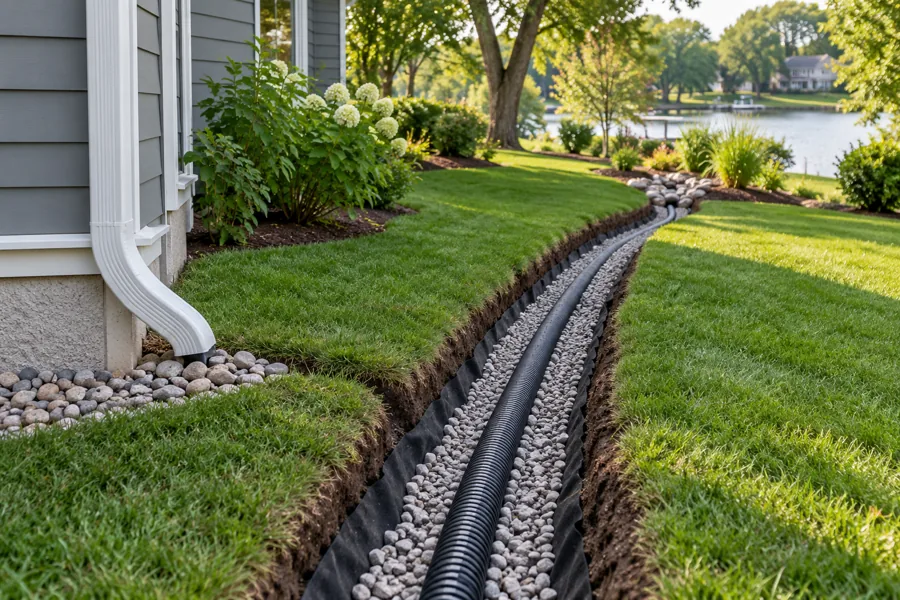
Stay on dry footing and follow the water after the storm passes. A wet patch beside the foundation matters differently from a low area across the lawn. We ask where the pool begins and which direction water moves. Photographs from several points help show that route without guessing from one puddle.
Water collecting against the foundation suggests low grade or concentrated runoff. Photograph the pool with the wall and nearby downspout visible. That wider view shows whether several sources feed the same strip.
Downspout extensions should carry water beyond the ground sloping back toward the house. Note disconnected joints and outlets hidden under mulch or snow. We trace those routes before choosing another buried drainage line.
A low rim collects runoff even when the well drain remains open. Watch for soil or mulch washing over that edge. The yard grade and the well outlet need to work together.
Pumped water returning toward the foundation adds another load to the same basin. We inspect the outlet location and the ground below it. A pipe extension helps only when its destination carries water away.
A French drain needs somewhere lower or another approved collection outlet. Photograph the far end of the proposed route as well as the wet area. The final pipe must reach that destination without creating a new pool.
| Fix | What It Changes | What We Plan |
|---|---|---|
| Grading | Moves surface runoff away from the wall | Ground levels, nearby paving, and a route beyond the foundation |
| Downspout extensions and buried lines | Carries concentrated roof water farther from the house | Pipe route, cleaning access, and an open outlet |
| French drains | Collects water along a wet strip | Trench, gravel, perforated pipe, and a real discharge destination |
| Discharge outlets | Gives collected or pumped water somewhere to leave | Outlet height, winter exposure, and runoff across the receiving ground |
French drain installation begins with the destination rather than the trench length. Without fall or an approved outlet, a buried gravel strip holds water beside the house. We explain how the pipe carries collected runoff beyond the wet ground. That route belongs on the written plan before digging starts.
Grading away from the house also needs enough room beside the wall. Paving, stairs, and neighboring ground levels change what soil work will accomplish. We compare those limits with downspout extensions and buried discharge options. The goal is a route that fits the property rather than a deeper puddle.
Minneapolis clay soil absorbs water slowly after heavy rain and snowmelt. A French drain buried in that clay still needs a real outlet. We trace that exit before recommending gravel and perforated pipe. Foundation drainage works when collected water leaves the wet strip instead of soaking beside it.
Snow piled against the house adds meltwater to the same ground in spring. Extensions removed for winter sometimes never get put back on the downspouts. We look for those changes before proposing excavation across the yard. Reconnecting the roof-water route belongs in the discussion alongside any buried drain.
Downspouts and sump pumps must not discharge into the sanitary sewer. The plan uses yard drainage or another approved outlet instead. We also explain how the outside connection behaves during a freeze. Winter exposure matters when a pipe carries water through cold air above the soil.
A soggy strip first needs a look at its water source and outlet. Roof runoff from one disconnected extension differs from water gathering across the whole lawn. We compare grading and downspout changes before choosing a buried collector. A French drain belongs where collected water has somewhere useful to leave the wet area.
A gravity drain needs enough fall to carry water toward its destination. We review the levels before proposing a trench that ends in another buried pocket. The next discussion covers other approved collection or discharge options for that property. The pipe route and outlet should be explained together before any digging is priced.
The extension might end on ground that still slopes back toward the wall. We follow the water beyond the pipe instead of measuring only its length. A blocked joint or crushed section also slows roof runoff along the route. Photos during rain show whether the extension carries water beyond the original low spot.
Photograph standing water before the ground dries and mark which downspouts feed it. Include the pump outlet and any paving between the puddle and open lawn. Leave utility locating and test digging to the planned work. We use the photos to discuss the source, route, and restoration without guessing from dry grass alone.
The route length, digging depth, access, and outlet change the work involved. Paving crossings add a different task from cutting through an open lawn. We list grading, pipe, gravel, and restoration in the written price. No project range replaces a look at where your collected water will leave.
Tell us about irrigation lines, planting beds, and recent utility work. Those details help plan access before the ground gets opened. A longer route sometimes reaches an outlet that a short trench cannot serve. We explain that choice using the yard levels rather than only the amount of pipe.
Water rising beneath the slab still needs an indoor collection check. We use interior drain tile when groundwater reaches several floor edges. A defined leaking wall opening points toward foundation crack repair. Yard work reduces runoff without automatically sealing every buried crack or wall joint.
We plan runoff routes in the communities listed below using the actual yard slope. Tell us where water stands and where the pump currently discharges. Pictures after rain show the low spots before they disappear. The route needs a working destination, not simply a new trench beside the same wall.
Describe the puddle beside the foundation and where nearby downspouts end. We will discuss slope and a usable outlet before proposing a buried pipe. The written plan explains collection, discharge, digging, and restoration for your yard.
Minneapolis PureSeal
Minneapolis and surrounding area
contact@waterproofingminneapolis.comMonday through Friday, 8:00 AM to 5:00 PM
Emergency calls: available 24/7